
Systems Research for Data-intensive Applications
This project conducts research on optimizing the storage hierarchy for data-intensive applications, focusing on (1) memory cache redesign and (2) cloud-native relational database with persistent memory disaggregation. The research is done jointly with collaborators at UTSC (China), Alibaba, and MSRA.
Efficient and Scalable Parallel Traffic Simulation
This project builds on the QarSUMO prototype that performs parallel traffic simulation, as a computation-intensive component of ML-based traffic management. The focus for the next year includes fidelity improvement (to sequential version), dynamic rerouting, and traffic-adaptive road network repartitioning.
AI and drug repurposing for diseases induced by viruses
Artificial intelligence-based compound-viral proteins interaction framework, will be used via a transfer learning setting to prioritize a set of FDA approved and investigational drugs which can potentially inhibit a specific viral proteins. To filter and narrow down the lead compounds from curated collections of pharmaceutical compounds, we use a rigorous computational framework that included homology […]
Automatic Diagnosis of 12-Lead ECG on Cardiac Arrhythmias with novel Deep Learning Neural Network model
The precision of current models restricts the use of automatic electrocardiogram (ECG) analysis in clinical practice. There is a high hope for how ML+AI technology, might enhance clinical practice. Here, we build a Neural Network-based model that will be developed using MIT Benchmark data and others to study a newly generated data from Pittsburgh hospital […]
AI+ML for rapid detection of bacterial infection to reduce hospital-acquired infections and prevent septic shock and heart attack
The antibiotic susceptibility test (AST) is essential in the clinical diagnosis of serious bacterial infections such as sepsis, but it typically takes 2–5 days for sample culture, antibiotic treatment, and result reading. Detecting metabolites secreted from bacteria with surface-enhanced Raman scattering (SERS) and using robust ML+AI algorithms will enable the identification of the “fingerprint” spectra […]
Data-centric AI
Data-centric AI is emerging as a discipline of “systematically engineering the data” for AI. The goal is to make it easier for practitioners to understand, program and iterate on datasets, instead of spending time on models. In this project, we will focus on the effect of “bad data” on different ML/DL pipelines and what can […]
Survey2Persona
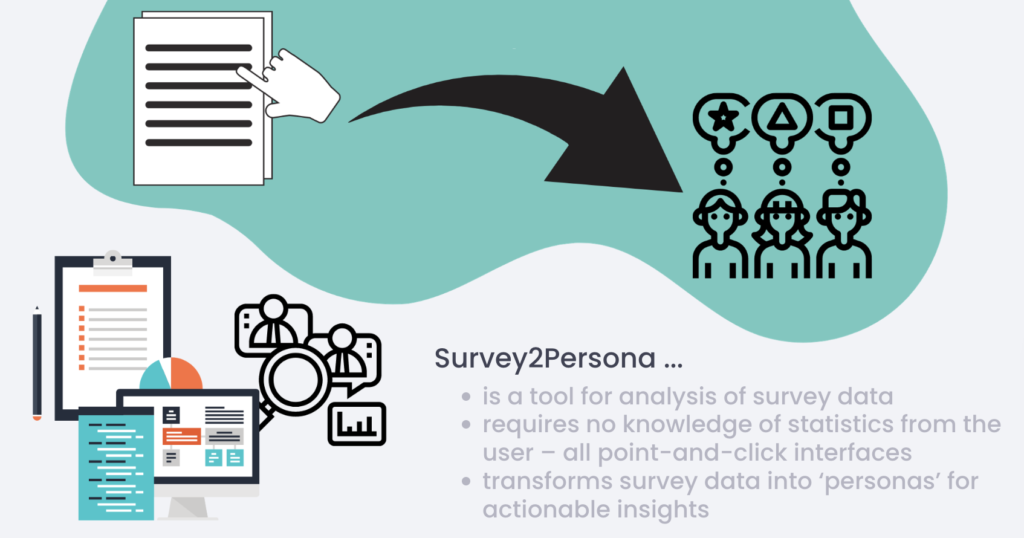
Survey2Persona (https://s2p.qcri.org/) a tool for analysis and visualization of survey data. Survey2Persona requires no knowledge of statistics from the user – all processing via point-and-click interfaces. Survey2Persona transforms numerical survey responses and demographic data into ‘personas’ for actionable insights.
METRIC
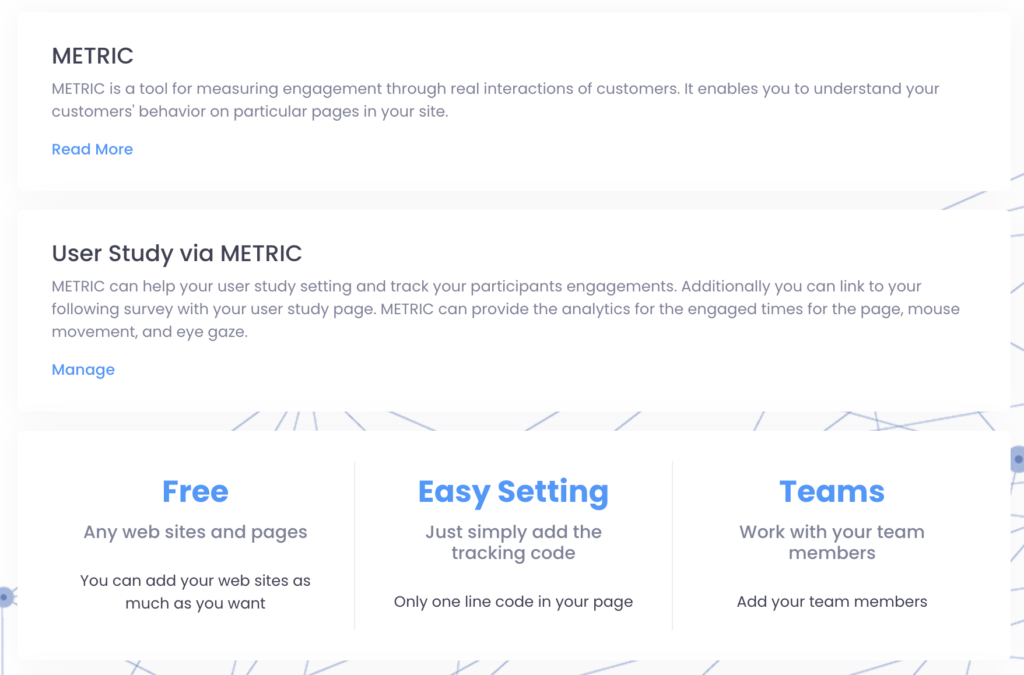
METRIC: (https://metric.qcri.org/) is a tool for collecting, measuring, analyzing, and reporting the engagement of online systems through real interactions of customers or users, including real-time. METRIC enables system stakeholders to enhance their understanding of their customers via actual behavior on particular pages in the online systems, including the focus and interaction with sub-elements on a […]
Acua – Audience, Customer, and User Analytics

Acua (https://acua.qcri.org/) is an AI+ML+HCI tool for the integrated audience, customer, and user analytics across multiple platforms providing actionable insights for multiple objectives and roles. Acua addresses the key challenges of data analytics! Data updated daily! Processed, cleaned, and AI+ML aggregated! Integration of multiple feeds! (e.g., social media, email, website, CRM). Robust architecture! Scales to […]
AI can help prepare, respond to future pandemics: QCRI expert
Artificial Intelligence (AI) has a major role to play in preparing for and responding to future pandemics, a team of top Qatar-based researchers said.“The data generated in the past two years can prove invaluable in terms of tackling the next pandemic,” stated Dr Sanjay Chawla, research director of Qatar Centre for Artificial Intelligence (QCAI) at […]