Events

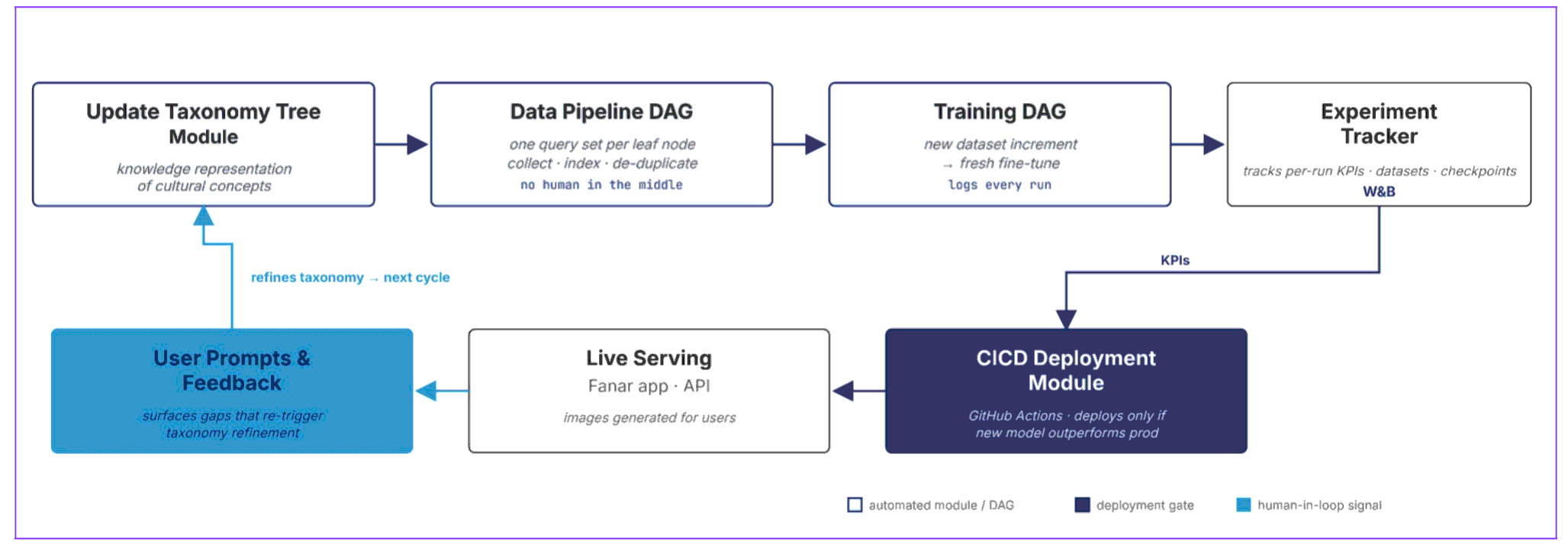
Feedback-guided Self-Improving Model for Fanar Arabic GenAI using MLOps and Taxonomy Evolution

Feedback-guided Self-Improving Model for Fanar Arabic GenAI using MLOps and Taxonomy Evolution

This work builds on top of a fundamental conviction that the development of production-grade ML-based systems starts after the first deployment of an initial model. The basic idea is that there is no way to comprehensively collect all relevant data possible to achieve a certain user-satisfaction-related metric but that it…
Rapid disaster damage assessment using deep adversarial sliced Wasserstein domain adaptation

Fatma AlNaimi , Abdulaziz Al-Homaid , Ferda Ofli , Abdelkader Baggag Neural Computing and Applications (2026)

Particles Don’t Care About Z: Towards Scaling Entropy Estimation of Unnormalized Densities

Safa Messaoud, Skander Charni, Elaa Bouazza, Ali Pourghasemi, Halima Bensmail ICML (2026)

DisasterVQA

Social media imagery offers a low-latency source of situational information during natural and human-induced disasters, but the complex, safety-critical reasoning required for disaster response is poorly served by general-purpose vision–language models. We introduce DisasterVQA, a benchmark dataset designed for perception and reasoning in crisis contexts. It comprises 1,395 real-world images…

Agentic Engagement with Educational AI Chatbots Among Pre-service Teachers: A Mixed-Method Study in Qatar

Youmen Chaaban , Soon-Gyo Jung , Bernard J Jansen Journal of University Teaching and Learning Practice (2026)

DisasterVQA: A Visual Question Answering Benchmark Dataset for Disaster Scenes

Aisha Al-Mohannadi , Ayisha Firoz , Yin Yang , Muhammad Imran , Ferda Ofli Proceedings of the International AAAI Conference on Web and Social Media (2026)

ISilDR: Isometric Seriation-based Dimensionality Reduction for Visual Cluster Analysis

Rene Cutura , Sophie Sadler , Quynh Quang Ngo , Michaël Aupetit , Michael Sedlmair IEEE Transactions on Visualization and Computer Graphics (2026)

Summer Internship Program 2026

Qatar Computing Research Institute (QCRI) officially kicked off its Summer Internship Program on May 10, 2026, welcoming 110 undergraduate and graduate interns for an intensive research and software development experience.Throughout the program, interns will gain hands-on training across QCRI’s key research areas, including Arabic Language Technologies, Cybersecurity, Data Analytics, Social…

From Priming Modalities to Educational AI Chatbot Engagement: A Study of 67 Learners

Trang Xuan , Joni Salminen , Ilkka Kaate , Farhan Ahmed , Danial Amin , Rajat Patil , Soon-Gyo Jung , Jinan Y. Azem , Bernard J. Jansen International Journal of Human–Computer Interaction (2026)

Understanding User Engagement with Cross-Platform Social Media Content Created by Humans Versus AI: An Evaluation of ChatGPT in Content Marketing

Kholoud Aldous , Joni Salminen , Ali Farooq , Soon-gyo Jung , Bernard Jansen ACM Transactions on the Web (2026)

FanarGuard: A Culturally-Aware Moderation Filter for Arabic Language Models

Masoomali Fatehkia, Enes Altinisik, Husrev Taha Sencar EACL (2026)

Fanar 2.0: Arabic Generative AI Stack

FANAR TEAM, Ummar Abbas, Mohammad Shahmeer Ahmad, Minhaj Ahmad, Abdulaziz Al-Homaid, Anas Al-Nuaimi, Enes Altinisik, Ehsaneddin Asgari, Sanjay Chawla, Shammur Chowdhury, Fahim Dalvi, Kareem Darwish, Nadir Durrani, Mohamed Elfeky, Ahmed Elmagarmid, Mohamed Eltabakh, Asim Ersoy, Masoomali Fatehkia, Mohammed Qusay Hashim, Majd Hawasly, Mohamed Hefeeda, Mus'ab Husaini, Keivin Isufaj, Soon-Gyo Jung,…

AI representing personas representing user groups: Applying the agency theory to examine interaction challenges of conversational personas as decision-making tools

Joni Salminen, Soon-Gyo Jung, Ilkka Kaate, Trang Thi Thu Xuan, Jinan Y. Azem, Kholoud Khalil Aldous, Danial Amin, Bernard J. Jansen Decision Support Systems (2025)

Uncertainty-Aware LLMs Fail to Flag Misleading Contexts

Tianyi Zhou, Johanne Medina, Sanjay Chawla NeurIPS 2025 - Reliable ML Workshop (2025)

Examining Student Teachers’ Agency in an AI-Supported Learning Environment: Q Methodology Research

Youmen Chaaban, Soon-Gyo Jung, Johanne Medina, Jinan Y. Azem, Joni Salminen & Bernard J. Jansen International Journal of Artificial Intelligence in Education (2025)

Investigating the Usability of an Educational AI Chatbot by Middle School Teachers and Students for Enhanced Learning

Kholoud Khalil Aldous , Joni Salminen , Soon-gyo Jung , Jinan Y. Azem , Johanne Medina , Salar M. Khan , Amani Alabed , Bernard J. Jansen International Conference on Foundation and Large Language Models (FLLM) (2025)

Cipherbot: An AI-Powered Educational Assistant for Conversational Q&A About Course Material

Jinan Azem , Soon-Gyo Jung , Johanne Medina , Kholoud K. Aldous , Joni Salminen , Bernard J Jansen International Conference on Foundation and Large Language Models (FLLM) (2025)

Deployable Code for Early Prediabetes Detection: The PRISQ Model

Leveraging data from the Qatar Biobank, we have created and validated a deployable algorithm for prediabetes screening. The PRISQ model’s code takes basic health metrics as input and outputs a clear risk category (Low, Moderate, High). This allows for seamless integration into digital health platforms, electronic health records, and public…

Explaining the role of Intrinsic Dimensionality in Adversarial Training

Enes Altinisik, Safa Messaoud, Husrev Taha Sencar, Hassan Sajjad, Sanjay Chawla ICML (2025)

DSGR

We introduce Domain Shift across Geographic Regions (DSGR), a new large-scale dataset designed to study the effects of real-world geospatial distribution shifts in satellite imagery classification. DSGR captures variability across diverse geographic regions, with particular emphasis on underrepresented areas such as Africa and Oceania, enabling systematic analysis of how regional…

OutSingle

A Python tool for finding outliers in RNA-Seq gene expression count data using SVD/OHT OutSingle has been tested on Windows (11). Note that OutSingle is still in alpha stage, so encountering bugs while running it is expected. If you use OutSingle in your research you can cite our paper:Edin Salkovic,…

BigQUIC: Big Quadratic Inverse Covariance Estimation

Use Newton’s method, coordinate descent, and METIS clustering to solve the L1 regularized Gaussian MLE inverse covariance matrix estimation problem. https://cran.r-project.org/web/packages/BigQuic/index.html

COUSCOus

Motivation: Current methods for predicting protein residue contacts are valuable but incomplete and do not fully agree. We developed a new method, COUSCOus, that combines advanced statistical techniques to improve accuracy. Our method consistently outperforms the established PSICOV tool across multiple benchmarks and independent tests. This demonstrates that superior statistical…

Deepsol

MotivationProtein solubility plays a vital role in pharmaceutical research and production yield. For a given protein, the extent of its solubility can represent the quality of its function, and is ultimately defined by its sequence. Thus, it is imperative to develop novel, highly accurate in silico sequence-based protein solubility predictors.…

DeepCrystal

MotivationQCRI deep learning models for crystallization propensity prediction, DeepCrystal and B, BCrystal is ready to compute. How to get started?Perform the following steps to signup:1. Navigate to the Sign Up tab in the top navigation bar.2. Fill in your details and press register, a registration confirmation mail will be sent,…

Deep learning, transformers and graph neural networks: a linear algebra perspective

Abdelkader Baggag, Yousef Saad Numerical Algorithms (2025)

What is User Engagement?: A Systematic Review of 241 Research Articles in Human-Computer Interaction and Beyond

Bernard J. Jansen, Kathleen Guan, Joni Salminen, Khloud Aldous, Soon-gyo Jung Proceedings of the Conference on Human Factors in Computing Systems (CHI) (2025)

New Paper Published

We are pleased to announce the publication of Deep learning, transformers, and graph neural networks: a linear algebra perspective in Numerical Algorithms. Authors: Abdelkader Baggag and Yousef Saad (SIAM von Neumann Award winner). Abstract (brief): As AI permeates nearly every field of science and engineering, this article invites the numerical linear algebra (NLA) community to engage directly with…

Cipherbot: A Learning Platform for AI-Augmented Education

Soon-Gyo Jung, Johanne Medina, Kholoud Aldous, Jinan Azem, Joni Salminen, Bernard J Jansen Proceedings of the Augmented Humans International Conference (2025)

AIDR – Artificial Intelligence for Digital Response

AIDR—the Grand Prize winner of the 2015 Open Source Software System Challenge—is a free and open platform to filter and classify social media messages related to emergencies, disasters, and humanitarian crises. AIDR uses human and machine intelligence to automatically tag up to thousands of messages per minute. https://aidr.qcri.org

QCRI/CSE paper advances research and innovation by addressing limitations of AI technologies and their applications to global challenges

A research paper, originating from doctoral work at CSE and an ongoing project at QCRI, developed through collaboration between the two institutions, has been accepted for presentation at the IEEE/CVF Conference on Computer Vision and Pattern Recognition (CVPR) 2025 in Nashville, USA. Authored by Eng. Sara A. Al-Emadi, PhD candidate,…

Distortion-aware Brushing for Reliable Cluster Analysis in Multidimensional Projections

Hyeon Jeon, Michael Aupetit, Soohyun Lee, Kwon Ko, Youngtaek Kim, Ghulam Jilani Quadri IEEE Transactions on Visualization and Computer Graphics (2025)

Oral Cancer Artificial Intelligence Screening System

QCRI, Qatar University (QU), Hamad Medical Corporation (HMC), Primary Health Care Corporation (PHCC), Complutense University – Madrid in Spain, University of Oviedo in Spain, Allied Hospital of Faisalabad in Pakistan, and McGill University in Canada has joined forces to develop a generalizable oral cancer AI screening system using multi-ethnic cohorts…

Fanar

Fanar is an Arabic AI Large Language Model developed by the Qatar Computing Research Institute at Hamad Bin Khalifa University, a member of Qatar Foundation for Education, Science, and Community Development. It is sponsored by the Qatari government through the Ministry of Communications and Information Technology. Fanar bridges Arabic language…

Aircraft Predictive Maintenance Project

This joint project between QCRI and Boeing Company aims to predict aircraft parts that need replacement before failure occurs. This involves finding the possible physical parts that may have caused the maintenance messages (MMSGs) to appear in the flight leg, even before flight deck effects (FDEs) alerts utilizing embedding space…

Oral Cancer Artificial Intelligence Screening System Project

QCRI, Qatar University (QU), Hamad Medical Corporation (HMC), Primary Health Care Corporation (PHCC), Complutense University – Madrid in Spain, University of Oviedo in Spain, Allied Hospital of Faisalabad in Pakistan, and McGill University in Canada has joined forces to develop a generalizable oral cancer AI screening system using multi-ethnic cohorts…

Fanar Arabic-Centric Large Language Model

An Arabic-Centric end-to-end multimodal LLM that will become Qatar’s flaghip foundational model https://elmi.hbku.edu.qa/en/projects/fanar-arabic-centric-large-language-model

Progressive Education

Design and implement targeted surveys of learners (and potentially educators) at different levels in Qatar Foundation, and at different stages of the “applicant-to-alumni” journey. Analyze the results of these surveys using machine learning tools, and potentially augment the survey data with available data from other sources such as learning management…

Privacy Personas in the MENA Region: A Large-Scale Analysis of 21 countries

Previous research has established that social media users in the Middle East and North Africa (MENA) region have distinct behaviors that separate them from other regions of the world, e.g., relating to profile pictures, the role of family, and cultural norms. However, the social media privacy behaviors and needs of…

QRDI Grant Awarded for aiMCard Project – Recognized as Group A (Highly Competitive)

QCAI is delighted to announce that our project “aiMCard: Transformative Healthcare AI Multi-Modal Tool for Integrated Cardiometabolic Risk Prediction in Qatar” has been awarded funding under the 8th cycle of the Path Towards Precision Medicine (PPM), supported by the Qatar Research, Development, and Innovation (QRDI) Council and the Qatar Precision Health Institute to Dr. Halima Bensmail. This project is Co-led…

Cipherbot: AI-Powered Transformation of Learning

Cipherbot: AI-Powered Transformation of Learning

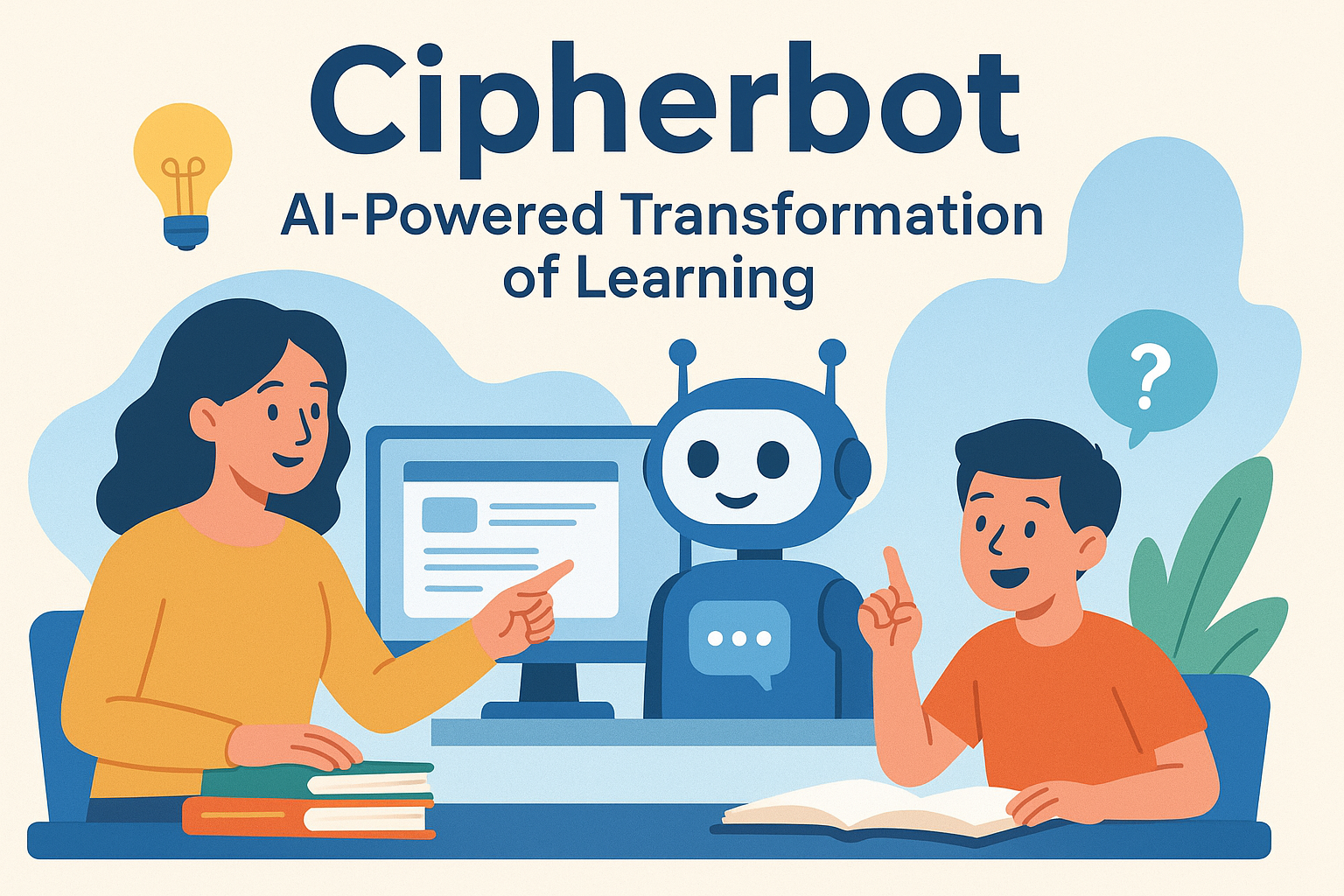
Experience AI-enhanced education with Cipherbot, a platform for teachers and students. Cipherbot, an AI chatbot, allows students to ask questions and get answers directly from their class materials, transforming static learning into dynamic dialogue. https://cipherbot.qcri.org https://cipherbot.qcri.org/pitch/Cipherbot%20Pitch.pdf

METRIC​: Measuring Engagement Through Remote Interactions of Customers

METRIC​: Measuring Engagement Through Remote Interactions of Customers

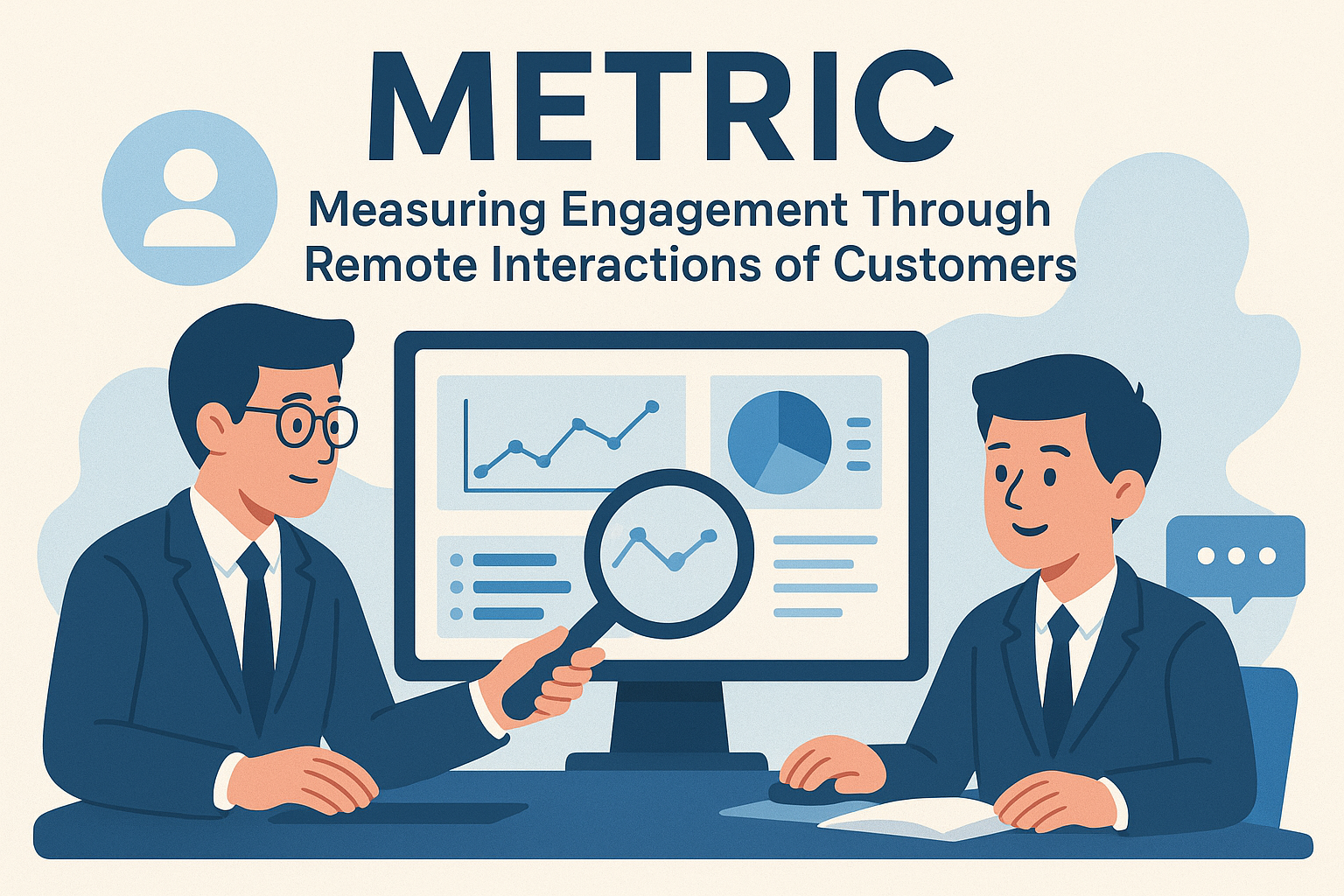
METRIC is a tool for collecting, measuring, analyzing, and reporting the engagement of online systems through real interactions of customers or users, including real-time. METRIC enables system stakeholders to enhance understanding of their customers via actual behavior on particular pages in the online systems, including the focus and interaction with…

Survey2Persona​

Survey2Persona​

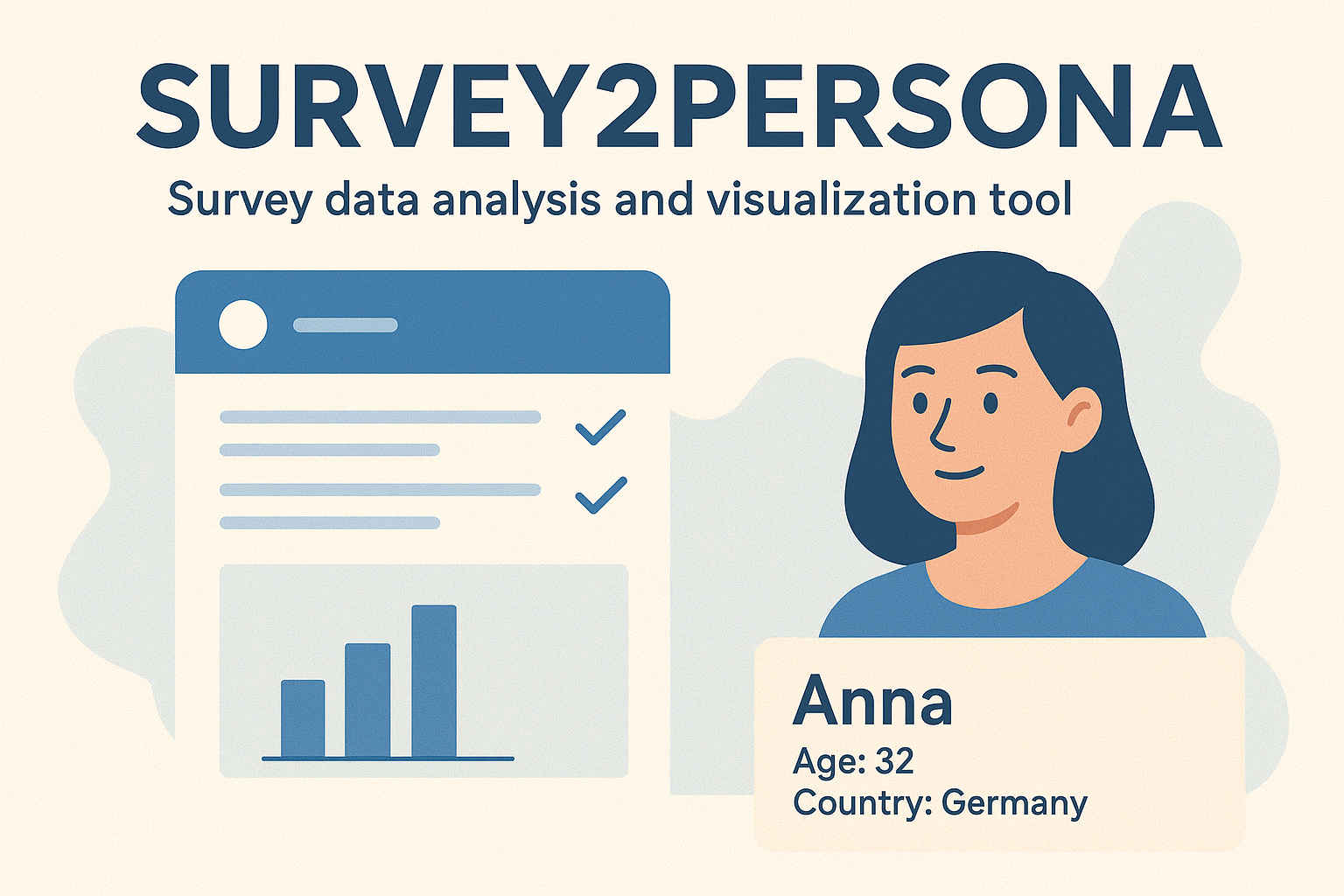
Survey2Persona is a survey data analysis and visualization tool. It transforms numerical survey responses (e.g., Likert scale, Binary, or other categorical data) and associate demographic survey data into personas, a humanized representation of the underlying survey data presented as a believable person, containing picture, name, age, country, and other demographic…

Acua

Acua

Acua is the organizing theme of our research efforts, focusing on audience, customer, and user analytics for an enhanced understanding of these populations for an organization. Our efforts concentrate on research for collecting, measuring, analyzing, and reporting digital data to enhance insights into the behavior of audiences, customers, and users,…

AI-Driven Disaster Response and Displacement Monitoring

Noora Al-Emadi, Muhammad Imran, Yin Yang, Ingmar Weber, Fabjan Lashi, Gaia Rigodanza, Ivana Hajžmanová, Ferda Ofli. Communications of the ACM (2025)

Delegating Your Thinking to ChatGPT: Are You Becoming Too Comfortable with AI to Think for Yourself?

When ChatGPT suffered an unexpected global outage in mid-2025, it was widely covered by news media outlets and social media erupted seemingly with panic. Memes showcasing the impact of the outage quickly filled social media channels. People from all walks of life, students, startup founders, marketing teams, media outlets, and…

Can LLMs Detect Their Confabulations? Estimating Reliability in Uncertainty-Aware Language Models

Tianyi Zhou, Johanne Medina, Sanjay Chawla Proceedings of the AAAI Conference on Artificial Intelligence, 40(44), 38164-38172.

Analysing Satellite Imagery Classification under Spatial Domain Shift across Geographic Regions

Sara Al-Emadi, Yin Yang, Ferda Ofli. International Journal of Computer Vision (2025)

ArnoldiGCL: Graph Contrastive Learning via Learnable Arnoldi-Based Guided Spectral Chebyshev Polynomial Filters

Mustafa Coşkun, Abdelkader Baggag, Mehmet Koyutürk Proceedings of the ACM SIGKDD Conference on Knowledge Discovery and Data Mining (2025)

When Personas Talk to You: Evaluating the Evolution of User Personas from Static Profiles to Conversational User Interfaces

Ilkka Kaate, Joni Salminen, Soon-Gyo Jung, Trang Thi Thu Xuan, Jinan Y Azem, João M Santos, Bernard J Jansen Proceedings of the ACM Designing Interactive Systems Conference (2025)

Machine Learning-Driven Insights and Predictions for CO2 Adsorption in Metal-Organic Frameworks

Skander Charni, Raeesh Muhammad, Abdulkarem I. Amhamed, Brahim Aissa, Halima Bensmail International Conference on Thermal Engineering (ICTEA) (2025)

RWDS

Object detectors achieve strong performance on benchmark datasets, yet most are trained under the i.i.d. assumption, leading to significant degradation when deployed under real-world distribution shifts. Domain Generalisation (DG) addresses this challenge by enabling models to generalise to unseen, Out-Of-Distribution data without access to target domains during training. However, evaluating…

Benchmarking Object Detectors under Real-World Distribution Shifts in Satellite Imagery

Sara Al-Emadi, Yin Yang, Ferda Ofli. Computer Vision and Pattern Recognition (CVPR) (2025)

Comprehensive Analysis of Rare Variants Associated with Genetic Predisposition to Non-BRCA Familial Breast Cancer Among Arabs

Ehsan Ullah, Hikmat Abdel-Razeq, Sana Bentebbal, Abdullah Shaar, Nehad Alajez, Mohamad Saad, Julie V. Decock Clinical Cancer Research (2025)

Evaluating Robustness of LLMs on Crisis-Related Microblogs across Events, Information Types, and Linguistic Features

Muhammad Imran, Abdul Wahab Ziaullah, Kai Chen, Ferda Ofli. WWW 2025 - Proceedings of the ACM Web Conference (2025)

Human-centred artificial intelligence in progressive education: unravelling the benefits and challenges in Qatar’s HEIs

Bernard J. Jansen, Soon-gyo Jung, Ali Farooq, Joni Salminen, Kholoud Aldous, Pilira Stella Msefula, Amani Alabed, Salar M. Khan, Richard O’Kennedy The Future of Education Policy in the State of Qatar, Singapore: Springer Nature (2025)

What is User Engagement?: A Systematic Review of 241 Research Articles in Human-Computer Interaction and Beyond

Bernard J Jansen, Kathleen W Guan, Joni Salminen, Kholoud Khalil Aldous, Soon-Gyo Jung Proceedings of the Conference on Human Factors in Computing Systems (CHI) (2025)

HCT-QA: A Benchmark for Question Answering on Human-Centric Tables

Mohammad Shahmeer Ahmad, Zan A Naeem, Michael Aupetit, Ahmed Elmagarmid, Mohamed Eltabakh, Xiasong Ma, Mourad Ouzzani, Chaoyi Ruan arXiv preprint arXiv:2504.20047 (2025)

Measuring the Validity of Clustering Validation Datasets

Hyeon Jeon, Michael Aupetit, DongHwa Shin, Aeri Cho, Seokhyeon Park, Jinwook Seo IEEE Transaction on Pattern Analysis and Machine Intelligence (2025)

Genome‐Wide Association Study for Resting Electrocardiogram in the Qatari Population Identifies 6 Novel Genes and Validates Novel Polygenic Risk Scores

Nahin Khan, Abdullah Shaar, Khalid Kunji, Atlas Khan, Mohamed Elshrif, Mohammed Bashir, Mohammed Thamer Ali, Ayman Al Haj Zen, Krzysztof Kiryluk, Georges Nemer, Akl C. Fahed, Mohamad Saad Journal of the American Heart Association (2025)

Tisslet: Tissues-based Learning Estimation for Transcriptomics

Ahmed Miloudi, Aisha Al-Qahtani, Thamanna Hashir, Mohamed Chikri, Halima Bensmail BMC bioinformatics (2025)

Fanar: An Arabic-Centric Multimodal Generative AI Platform

Fanar Team: Ummar Abbas, Mohammad Shahmeer Ahmad, Firoj Alam, Enes Altinisik, Ehsannedin Asgari, Yazan Boshmaf, Sabri Boughorbel, Sanjay Chawla, Shammur Chowdhury, Fahim Dalvi, Kareem Darwish, Nadir Durrani, Mohamed Elfeky, Ahmed Elmagarmid, Mohamed Eltabakh, Masoomali Fatehkia, Anastasios Fragkopoulos, Maram Hasanain, Majd Hawasly, Mus'ab Husaini, Soon-Gyo Jung, Ji Kim Lucas, Walid Magdy,…

PersonaCraft: Leveraging language models for data-driven persona development

Soon Gyo Jung, Joni Salminen, Kholoud Khalil Aldous, Bernard J. Jansen  International Journal of Human Computer Studies (2025)

PopMLvis: a tool for analysis and visualization of population structure using genotype data from genome-wide association studies

Mohamed Elshrif , Keivin Isufaj , Khalid Kunji , Mohamad Saad BMC Bioinformatics (2024)

RetClean: Retrieval-Based Data Cleaning Using LLMs and DataLakes

Zan Ahmad Naeem, Mohammad Shahmeer Ahmad, Mohamed Y Eltabakh, Mourad Ouzzani, Nan Tang Proceedings of the VLDB Endowment (2024)

S²AC: Energy-Based Reinforcement Learning with Stein Soft Actor Critic

Safa Messaoud, Billel Mokeddem, Zhenghai Xue, Linsey Pang, Bo An, Haipeng Chen, Sanjay Chawla ICLR (2024)

(Won Deployed Application Award) Flood Insights: Integrating Remote and Social Sensing Data for Flood Exposure, Damage, and Urgent Needs Mapping.

 Zainab Akhtar, Umair Qazi, Aya El-Sakka, Rizwan Sadiq, Ferda Ofli, Muhammad Imran. AAAI Conference on Artificial Intelligence (2024)

Genetic Susceptibility to Arrhythmia Phenotypes in a Middle Eastern Cohort of 14,259 Whole-Genome Sequenced Individuals

Fatima Qafoud , Mohamed Elshrif , Khalid Kunji , Asma Althani , Amar Salam , Jassim Al Suwaidi , Nidal Asaad , Dawood Darbar , Mohamad Saad Journal of Clinical Medicine (2024)

A pragmatic perspective on AI transparency at workplace

Ghanim Al-Sulaiti, Mohammad Amin Sadeghi, Lokendra Chauhan, Ji Lucas, Sanjay Chawla, Ahmed Elmagarmid AI and Ethics (2024)

Multi-omics and machine learning reveal context-specific gene regulatory activities of PML::RARA in acute promyelocytic leukemia

William Villiers, Audrey Kelly, Xiaohan He, James Kaufman-Cook, Abdurrahman Elbasir, Halima Bensmail, Paul Lavender, Richard Dillon, Borbála Mifsud, Cameron S. Osborne Nature Communications (2023)

Classes are Not Clusters: Improving Label-Based Evaluation of Dimensionality Reduction

Hyeon Jeon, Yun-Hsin Kuo, Michael Aupetit, Kwan-Liu Ma, Jinwook Seo IEEE Transactions on Visualization and Computer Graphics (2024)

Measuring Engagement Through Remote Interactions of Customers: Introducing METRIC

Jinan Y. Azem, Joni Salminen, Soon-gyo Jung, Bernard J. Jansen International Symposium on Networks, Computers and Communications (ISNCC) (2023)

Employing large language models in survey research

Bernard J. Jansen, Soon-gyo Jung, Joni Salminen Natural Language Processing Journal (2023)

Understanding Audiences, Customers, and Users via Analytics

Bernard J. Jansen, Kholoud K. Aldous, Joni Salminen, Hind Almerekhi, Soon-gyo Jung Springer International Publishing AG (2023)

Cross Modal Data Discovery over Structured and Unstructured Data Lakes

Mohamed Y. Eltabakh, Mayuresh Kunjir, Ahmed Elmagarmid, Mohammad Shahmeer Ahmad Proceedings of the VLDB Endowment (2023)

Mapping Flood Exposure, Damage, and Population Needs Using Remote and Social Sensing: A Case Study of 2022 Pakistan Floods

Zainab Akhtar, Umair Qazi, Rizwan Sadiq, Aya El-Sakka, Muhammad Sajjad, Ferda Ofli, Muhammad Imran. ACM Web Conference 2023 - Proceedings of the World Wide Web Conference, WWW (2023) 

Incidents1M: A Large-Scale Dataset of Images with Natural Disasters, Damage, and Incidents

Ethan Weber, Dim P. Papadopoulos, Agata Lapedriza, Ferda Ofli, Muhammad Imran, Antonio Torralba. IEEE Transactions on Pattern Analysis and Machine Intelligence (2023)

OutSingle: a novel method of detecting and injecting outliers in RNA-Seq count data using the optimal hard threshold for singular values

Edin Salkovic, Abdelkader Baggag, Ahmed Gamal Rashed Salem, Halima Bensmail*, Mohammad Amin Sadeghi Bioinformatics (2023)

From Theory to Practice: Deep Learning for Natural Language Processing

A 15 hour crash course on deep learning for NLP with practical exercises in Keras. The lecture series is conducted at the department of Computer Science and Applied Cognitive Science of the University of Duisburg-Essen. Here is the course material including slides, python notebooks, etc.

Analytics on Higher-Order Structured Data

Most existing AI/ML techniques have the implicit assumption that the input dataset is ready in its simplistic tabular form. However, this assumption does not hold for most applications that maintain complex relational database schemas or graph structures for representing their data. In such cases, the datasets that might bring the…

Scalable Time Series Analytics

Time series data and digital traces are everywhere and prevalent to most applications, e.g., IoT, digital health, smart cities, transportation, and sustainability applications. Collaboration with local partners–either government or private sectors–are most likely to include big opportunities for time series data research. The long-term (multi-phase) goal is to develop an…

Research projects repository system

QCRI employs researchers from different fields working on various projects. Since the researchers mostly focus on research conducted within their groups, each group has no overview of the projects running in the other groups. Moreover, there is no way to identify the projects or research outcomes that have been accomplished…

AI job portal customization for Silatech and World Cup

Silatech is hosting an event during the World Cup related and has to promote activities related to sustainable development goal (SDG) 8 of the United Nations. SDG 8 focuses on decent work and economic growth. Silatech is doing work related to empowering youth and employment and is interested in showcasing…

HBKU AI Job Augmentation

AI impacts jobs in different ways and could improve the efficiency and productivity of humans. This project plans to develop an AI solution to augment jobs at QCRI. The project involves identifying departments or jobs that could benefit from AI augmentation and determining the pain points in these departments. Once…

Examining the impact of AI on jobs from a gender perspective

AI could potentially have an impact on women’s economic empowerment and labour market opportunities by leading to job automation. Recent research by the IMF and the Institute for Women’s Policy Research found that women are at a significantly higher risk of displacement due to job automation than men. In this…

MedQoder – The Automated Medical Coder

Medical coding is an essential step in hospital revenue cycle. Medical coders perform the task of assigning for each patient visit, one or more codes from the international standard of medical coding systems such as ICD for diagnosis or CPT for procedure. This task is performed based on manually reviewing…

Computational Pathology

Digital Pathology has created numerous opportunities for machine learning and artificial intelligence. Several repetitive and tedious tasks done by pathologists can be automated or assisted by AI models. Whilst most existing research focus on adult cancer applications, we aim to focus on pediatrics applications. Accurate and timely diagnosis in pediatric…

Robust ML models

The aim of the project is to design ML models which are robust against adversarial attacks.  The specific use-case is to make  credit scoring models robust. We will not only explore model robustness against adversarial attacks but also concept-drift and covariate-shift.

YouRule: encouraging children’s physical activity by coding the rules of the game

The YouRule system aims to encourage both physical activity and learning to code for children and teenagers. The system lets end-users program the rules of a sports game (any kind they can invent), then allows them to wear sensors and play that game physically by the game rules they coded…

Visual Analytics of Wearable Data to Improve Health and Wellness

Diabetes and obesity are major health issues in Qatar (Qatar National Vision 2030). We designed InViTAG, a visual analytic platform to support healthcare professionals in improving the health and wellness of patients with diabetes or obesity based on wearable and biometric data.  Based on user feedback from previous studies, the…

Safe reinforcement learning

We have two projects related to safe reinforcement learning:

Augmented Intelligence using for Data Preparation

Transformer-based models (e.g., BERT, RoBERTa, XLNet) and giant language models (e.g., GPT-3 and T0pp) have a good potential to learn knowledge from multi-modal data, such as text, tables, and so on. This learned knowledge, if being used appropriately, can significantly help practitioners reduce human cost in terms of laborious data…

Augmented Intelligence for Personalized Patient Lifestyle Improvement based on Wearable Data

Health is one of the pillars of Qatar National Vision 2030. Qatar Foundation has recently restated these objectives as “individualized healthcare and disease prevention driven by emerging research, clinical approach, environment, and lifestyle”. Diabetes and obesity are significant health problems globally and are particularly prevalent in Qatar. These serious conditions…

Artificial Intelligence for Satellite Imagery (AI4SAT)

QCAI has a number of projects using satellite imagery analysis for different tasks such as road network inference, crash risk maps, internal displacement monitoring, flood extent and vulnerability mapping, among others. This project aims to combine these individual projects in a unified framework and build customized solutions for potential end…

Monitoring Attacks on Education on Social Media

Attacks on education, students, teachers and schools have intensified in recent years. Traditional methods miss many instances of education insecurities. The Education Above All (EAA) Foundation aims to develop a Global Data Service to host data on violations against the right to education and attacks on education. We aim to…

Landslide Detection through Social Media Image Streams

Landslides occur all around the world and cause thousands of deaths and billions of dollars in infrastructural damage worldwide every year. Satellite-based landslide detection introduces data latency ranging from several hours to days. We use social sensing imagery data from Twitter to identify landslide reports in real-time. Together with our…

Disaster Object Detection and Damage Assessment

In the aftermath of a large-scale disaster, it is important to assess the impacted area to identify damaged infrastructure such as roads, buildings, power lines. Social media can play an important role in current-day disaster management. Images shared from the disaster areas may include objects relevant to various response operations.…